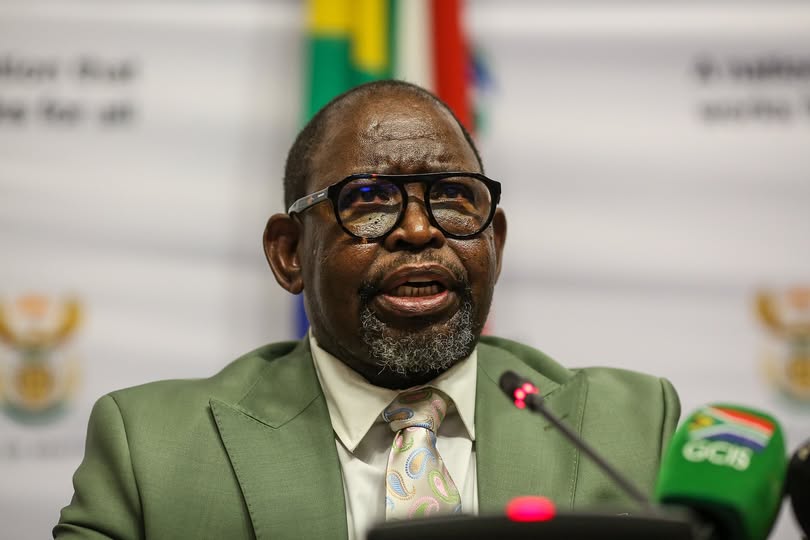

CAPE TOWN, South Africa — In a significant shift for Africa’s most industrialized economy, South Africa’s gross government debt is projected to stabilize as a share of GDP for the first time since the 2008/09 global financial crisis—marking 17 years of uninterrupted increases. Finance Minister Enoch Godongwana announced during the 2026 Budget presentation on February 25 that the ratio will peak at 78.9% in the 2025/26 fiscal year before declining to 77.3% in 2026/27 and further to 76.5% by 2028/29.
The announcement represents a potential turning point after prolonged fiscal pressures. South Africa’s debt-to-GDP ratio had remained relatively low and stable in the post-apartheid era, hovering around 27-35% of GDP in the early 2000s under fiscal prudence during the commodity boom years (e.g., roughly 30% in 2008). However, the 2008 global crisis, combined with subsequent domestic challenges—including slow growth, rising social spending, state-owned enterprise bailouts (notably Eskom), and the severe COVID-19 shock—drove rapid debt accumulation.
By 2019, the ratio had climbed to around 60%, and it surged further during the pandemic, exceeding 70% by 2021 and reaching a record high near 80% in recent years (with some estimates placing it at 78-79% in 2024/25). Debt-service costs ballooned as a share of revenue and expenditure, rising from about 7-9% of total spending in the late 2000s to over 20% in recent budgets, crowding out investments in infrastructure, education, and health.
Godongwana described the stabilization as evidence of “restored credibility” and “renewed resilience.” Key contributing factors include:
- South Africa’s first major sovereign credit upgrade in over 16 years by S&P Global in November 2025, reflecting improved fiscal management.
- Removal from the Financial Action Task Force (FATF) “grey list” for money-laundering deficiencies.
- Narrowing budget deficits (projected to fall from 4.5% of GDP in 2025/26 to around 3.1% by 2028/29) and a strengthening main budget primary surplus (from 0.9% of GDP in 2025/26 to 2.3% by 2028/29).
- Lower inflation (down to 3.2% in 2025), favorable borrowing conditions, declining bond yields, and an appreciating rand reducing debt-service costs by an estimated R10.6 billion over the medium term.
The 2026 Budget allocates R2.67 trillion ($168 billion) in spending for 2026/27, with notable increases in peace and security funding to R291.2 billion ($18 billion) by 2028 amid persistent high violent crime (averaging ~60 killings daily). Economic growth is forecasted at 1.6% for 2026, rising toward 2% by 2028, supported by structural reforms in energy, transport, and telecommunications.
Historical Comparison Table (Debt-to-GDP Ratio Highlights):
- ~2008 (pre-crisis): ~30-35%
- 2015: ~50-55%
- 2020 (COVID peak): ~70%+
- 2024/25 (recent high): Near 80%
- 2025/26 (peak/stabilization): 78.9%
- 2026/27: 77.3%
- 2028/29: 76.5%
This trajectory contrasts sharply with the pre-2008 era of debt reduction (e.g., halving the ratio in the 1990s-2000s under previous administrations) and underscores the challenges of low growth averaging below 2% in recent decades.
While the stabilization is cautious—dependent on sustained primary surpluses, growth acceleration, and reform implementation—it signals progress toward sustainable public finances. Analysts view it as positive for investor confidence and borrowing costs, though risks remain from structural issues like unemployment, inequality, and slow GDP expansion. As Godongwana noted: “For the first time in 17 years, debt will stabilise and it will continue to fall in the coming years.”